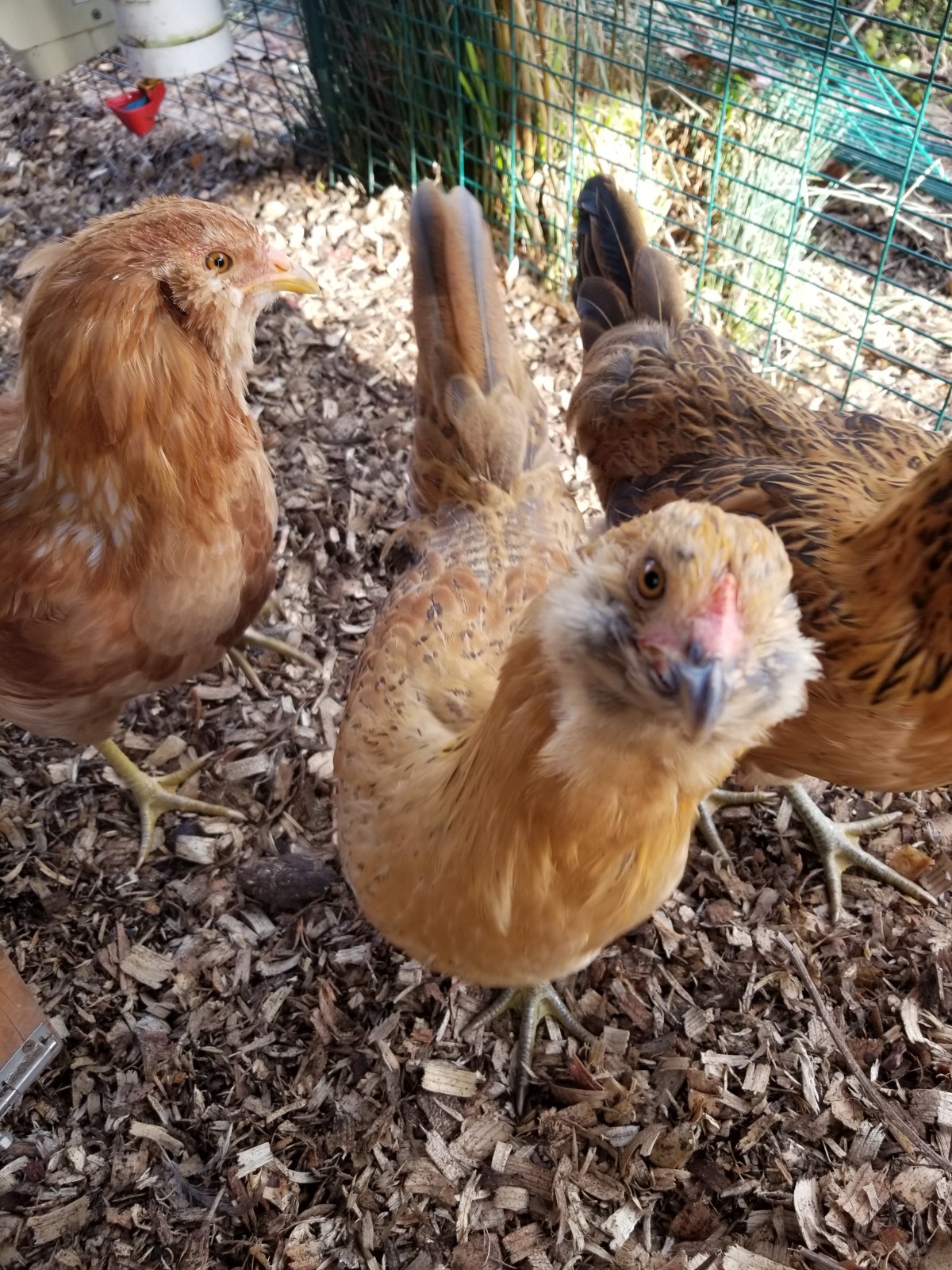
Featured

Why Choose a Chicken Pet?

Chickens are pets? I thought they were livestock, or they were when I was a kid. I lived on a small family farm for my early years and remember gathering the eggs and feeding the hens, but never got attached to them.

Certainly I never knew they had personalities or could bond with humans and be taught like other pets.

Some years ago, I got the hint that my job was going away, outsourced and gone forever, but it took the company a year to actually do it. I could have found another job and lost my severance pay, or waited to be let go and compete with my coworkers to find a new job. It was a stressful situation, and I decided that in the best interest of my blood pressure, I needed to get a pet. So, I had to decide what pet would be best for me. I didn’t want a cat again, because I had gone a decade or so without a litter box in the house and I didn’t intend to go back. I’m not really a dog person, and I didn’t want to be awakened early for “walksies”. I used to enjoy keeping fish, but now I prefer to let them swim free. Some of my coworkers had chickens as egg producers, but one of them told me chickens make great pets. The more I researched, the more I learned about chickens , the more I became excited about owning some.

A cat has never made me breakfast. Oh sure, they try, but mouse is not on the menu for me. Mauled songbird is also unappetizing and makes me sad. On the other hand, eggs laid by my own hens with a diet controlled by me, are more delicious and nutritious than what I could get at a store without paying a premium price. They are fresher and the whites haven’t broken down and the yolks are firm and orange and rarely break while cooking.

A dog has never helped with the weeding. They like to dig holes but not where I want them, and usually plants get damaged. Chickens are great at weeding. They scratch around my roses and other bushes keeping weeds from sprouting and they trim the grass, or destroy it entirely. I have to control where they go, of course, since they don’t always listen to me when I give instructions. But chicken wire around a few areas protects plants long enough for them to be able to survive the chicken assault. As a bonus, the hens eat pests and spiders so that I don’t need to use pesticides in my garden. I keep my vegetables in raised beds with chicken wire around them, and gardening is much easier.

Rabbits are terrible watch animals. They never tell you when something is going on in the yard or in the neighborhood. My hens always know. Several times they have told me that the neighbors are doing roofing, once that there was a turkey on my roof, and once a goose. I never would have gotten that photo without their calling me outside. They let me know when suspicious cats are in the yard. They have cats they tolerate and cats they don’t. They let me know which are the bad ones. They alert me to salespeople and deliveries, which is nice since I don’t like it when the delivery folks leave packages and don’t ring the bell or knock. No more melted ice cream or rained-on boxes is great.

Dogs and cats can’t fertilize my vineyard. In fact, cat feces is toxic to people (causing birth defects) and both harm plants. Chicken fertilizer is some of the best around and the hens work it into the soil without even being told to do it. As a result, my vineyard is an amazing producer of grapes year after year, as long as I water it.

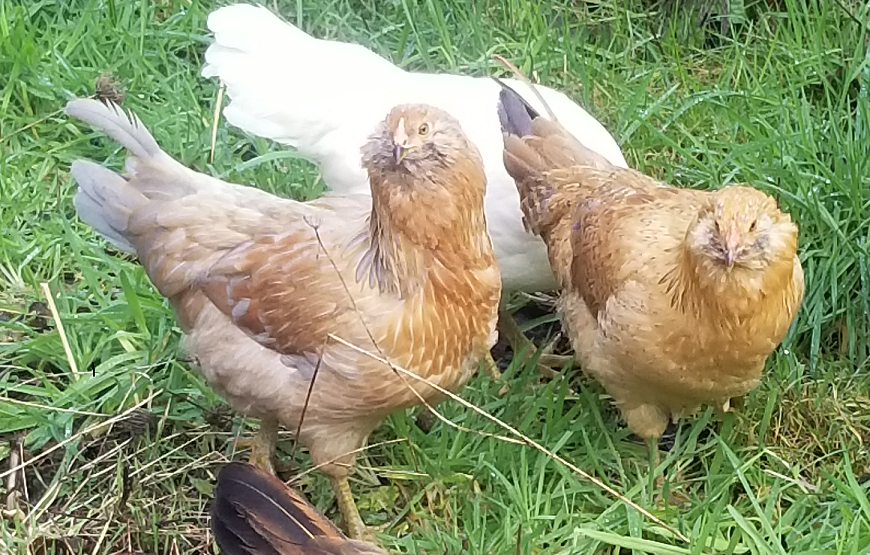
But, can a chicken provide the comfort of the furry animals mentioned above? Hens aren’t much into being held or petted, with few exceptions. The feathers get ruffled. But they can sit on my lap and talk to me. They run to me nearly every time I open the door or return home. (Not in the middle of a bath, though. They have limits.) They tell me everything that is going on. Sometimes, I am too stupid to understand, but figure it out later. Once it was that the wind blew a door closed. Most of the time they let me know they need something. They have been trying to teach me to understand them, and I can tell when they are getting frustrated with me. They are very smart. I think they might want to take the house back from me.

I get so much enjoyment from watching my hens be themselves, and interacting with them, and I don’t regret my decision to buy chickens instead of any other pet. I think they are the perfect choice for me. Other people may have different needs, but I needed chickens. They are the first thing I think of in the morning, and the reason I get out of bed. They would never let me sleep in while they were cooped up, anyway.
The First Six Weeks

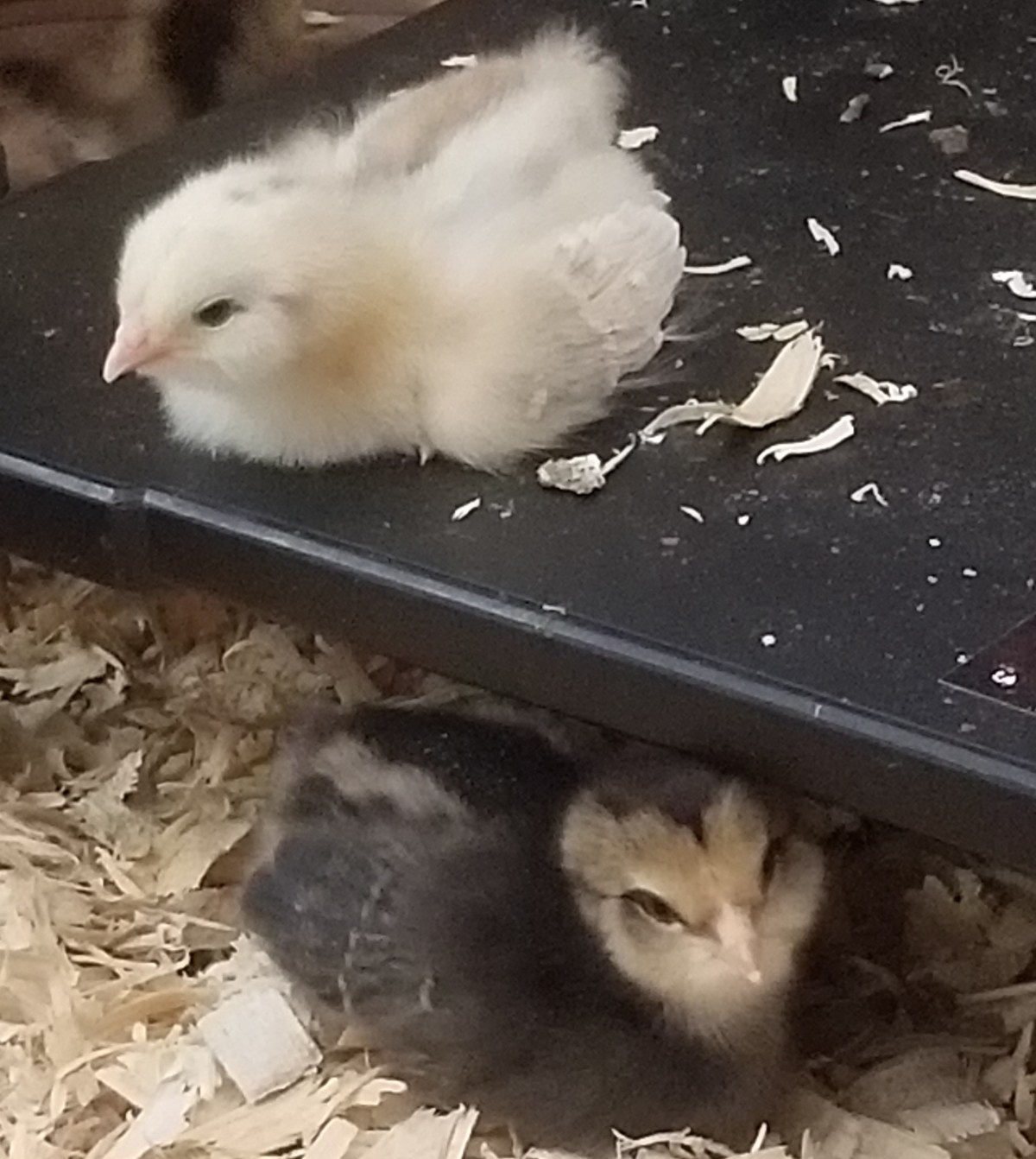
A lot of Easter chicks die because of poor planning. Pet chickens need specific care in order to thrive, and there is no reason to lose a chick if you know what to do.

It’s Spring and that’s a popular time to buy chicks. Feed stores have them in stock and may also have discounts on chick feed and kits and other necessities. If you are starting with some two day old chicks this season, it may be helpful for you to lay out a plan for the first six weeks.

Week One

I highly recommend keeping the brooder in the house, away from drafts and near where people will be able to interact with the chicks. The more contact the chicks have with people from their first moments, the more they will bond with their owner. They need to realize that we want to care for them and talk to them and play with them. Keep the brooder and heater as clean as possible. Every day, pick up each chick and check her behind for poopy butt. This is a potential chick killer. Poo can be loosened with a damp tissue by dabbing, until you can wipe it off. Never pull on it, because you may damage your chick. Only use approved litter for chicks in the brooder, never newspaper.

As often as needed, clean the food and water dishes. Remember that in this first week chicks may drown if not given a chick-safe waterer. Find out if your chicks have been vaccinated. If so, give them unmedicated chick crumbles and nothing else to eat. If they have not been vaccinated, I recommend medicated crumbles. Chicks do not need grit if crumbles are their only food. Chicks will teach each other to eat and drink once you have pecked with your finger at the right spots to show them how. If you get your chicks direct from the hatchery, they will never have eaten or drunk before you get them. So, have their feeders ready before you bring them home, and have the brooder heater already on. I don’t recommend a heat lamp, a light bulb or a lizard rock or anything else people sometimes improvise. These things can all lead to chick death, and the lamps cause a lot of fires.

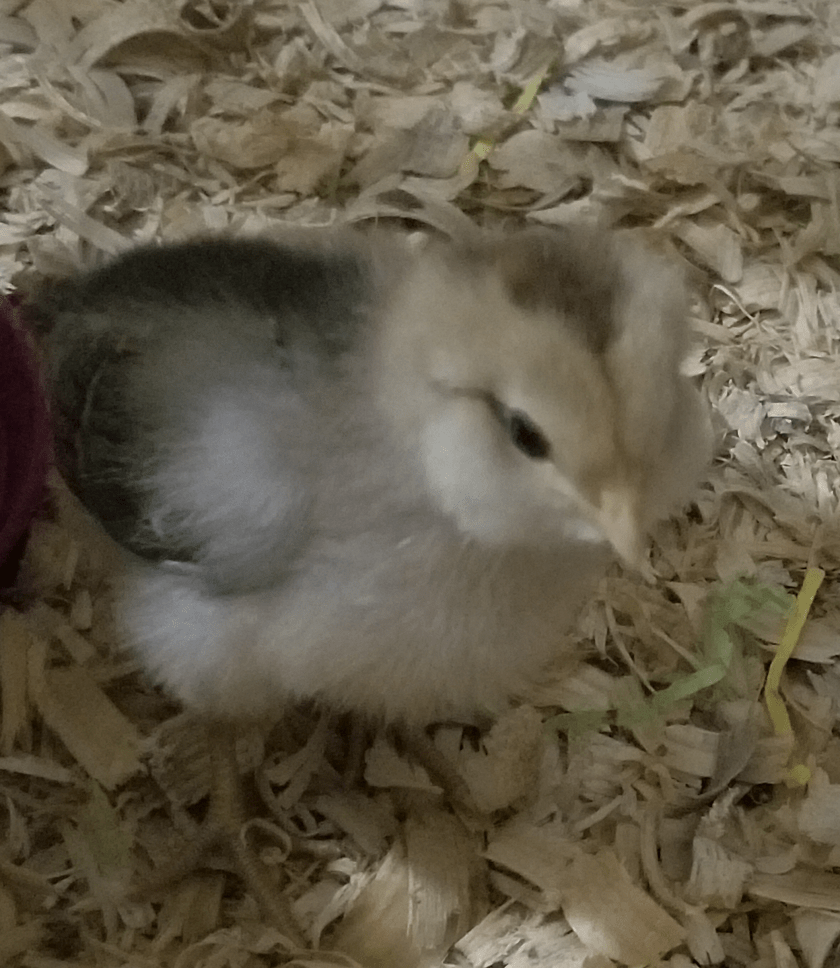
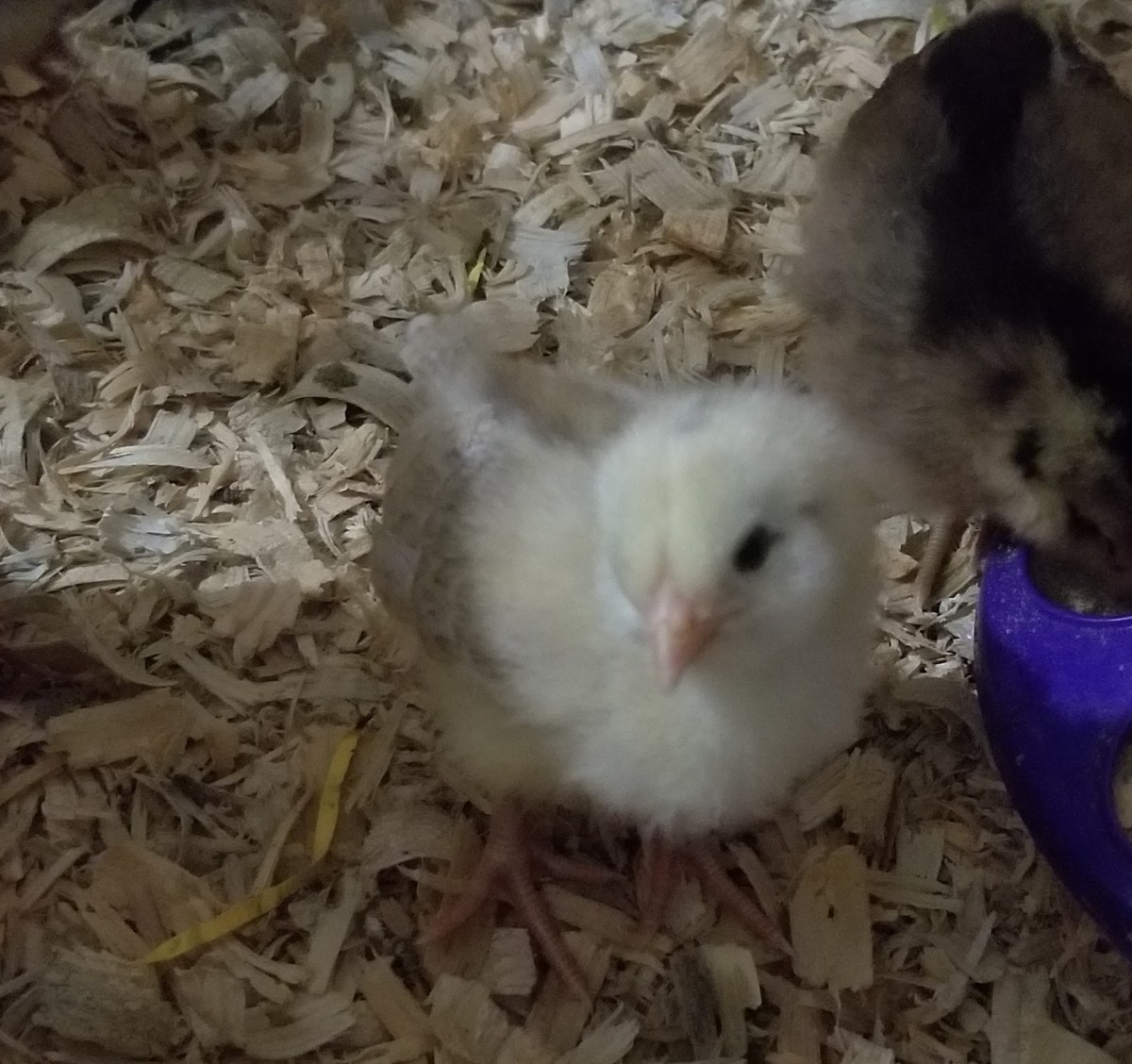
Spend as much time as possible just observing your chicks so they get accustomed to you. Play with your chicks several times a day. Let them climb on your hands and feet. Be careful, however, not to let them fall. Start calling them by their names, and talking to them. Happy chicks are quiet chicks, so a chick chirping has the same meaning as a baby crying. Something is wrong. Fix it as soon as you can. Your chick may be too hot or too cold or hasn’t found the food or water, or isn’t able to poop. My current hens were afraid of the dark as chicks, so I actually turned on a night light for them to calm them down. There are other potential health issues but those are not discussed here.

Week Two

Give them toys, like chick-sized perches for jumping. Bird toys that you make or get from a pet store may be fun. Mine really like pulling shredded paper out of toys, or the edible Easter grass that you can get this time of year. It is made with aspartame instead of sugar, so use your own judgment on whether you trust it. I have rarely seen a chick that likes mirrors, swings or xylophones. Continue the regimen from week one.

Week Three

Time for their first treats. My chicks love chia seeds. They are tiny and nutritious. Put the seeds in your hand and let the chicks come to you. Your shier chicks will eventually come to see what all the fuss is about. This is essential to make pets of your new flock. Other good treats are scrambled egg and broken down shelled sunflower seeds. Add a container of chick grit once you start feeding seeds.

Chicks are just like kids in that they each have their favorite and least favorite treats. However, they are more likely to keep trying a food until they develop a taste for it. You can try a finely chopped strawberry or other berry or cherry. It will be more welcome if it smells good to you. Make sure your chicks are not over eating the treats. They need the nutrition from their crumbles to grow into healthy hens.

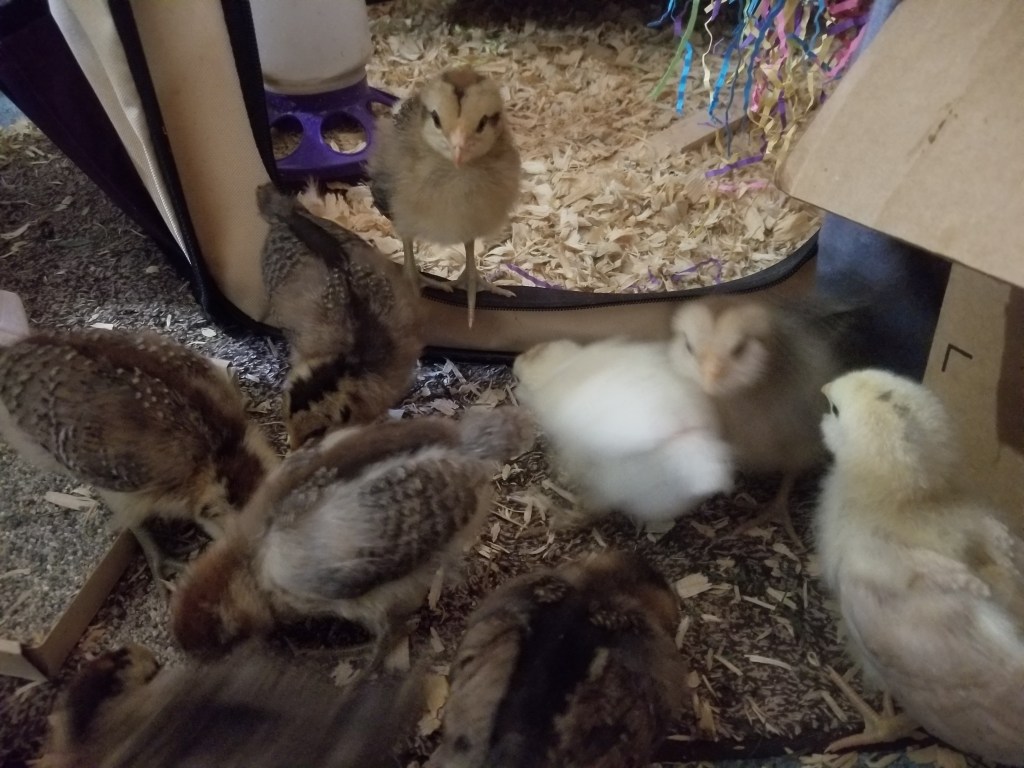
You may have to move your tiny flock into a bigger brooder at this point or soon after. They will have grown very quickly and need more space. I use a cloth dog pen with a mesh roof, in two sizes, so I can move them when they outgrow the smaller one. This is one of the safest ways to brood your chicks because they won’t get crushed in the corners.

Week Four

Introduce grass and other greenery from your yard. Make sure your chicks aren’t eating long strands of grass which could get stuck in their crops. Dandelions are great along with other edible weeds that are fresh and young so that they don’t taste too bitter. Depending on your weather, if the chicks are fully feathered at this point, they can go outside for an hour at a time. Always supervise them, as they are helpless. My chicks were only happy when they were all together, and terrified when not with one other chick, so you may experience the same thing. Don’t take just one chick outside, because she will be frightened. I had to pick up a chick in each hand when I moved them to clean their brooder, but I did it because it made them feel secure.

Week Five

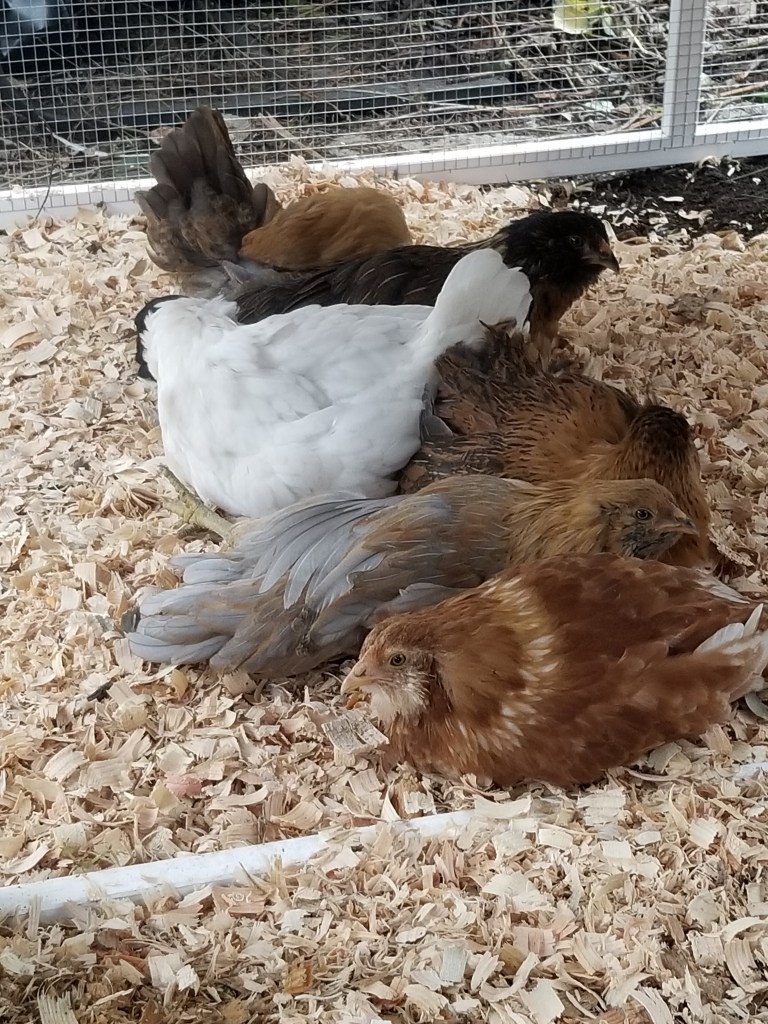
Your chicks can try more types of treats, including pomegranate seeds, mealworms, fennel fronds, grapes, watermelon, plums, and squash. If your chicks are fully feathered, they can spend time out in their run during the day. It needs to have sunny spots and shady spots, and preferably a nice place for their first dirt bath. I used a low box of dirt that felt good to my bare hands and the girls loved it. They tried to all get in at the same time, which is fun to watch. They still like to make a big chicken puddle at bath time.

Week Six

Most breeds of chicks should be ready to be outside full time by six weeks. However, if your climate is snowy into the Spring, you may have to delay. When you run low on chick starter crumbles, sometime after week six, start to blend it with grower feed to let them adjust.

Do not introduce six week old chicks to an established flock. They will need to be housed separately for a few months. Keep spending time with them. Gardening with your little flock is fun and teaches them how to hunt for bugs and which plants they should eat. You will need to teach them a call or sound that means to come to you. Use treats to get them to follow you while you make your chosen noise. You may also teach them a word that means to get out of the way. I use this whenever carrying something large or heavy and don’t want to step on them. They should all know their names by now. Praise them by name when you want to enforce a behavior. Pick them up when they go where they aren’t supposed to be, and tell them how sad you are that they did that.

Watch them closely to see how they treat each other. If you have a bully, it is good to teach them early how to behave towards their friends. If you have a shy, submissive chick, make sure she gets her share of the food.

There may be a need to seek out more specific information if your chicks have any special health needs like splayed legs, or refusal to eat, but these instructions will be enough for almost all chicks, as long as you buy healthy chicks to start. The amount of time you spend with them will determine the quality of pet you end up with after your hard work. Your chicks should be happy to see you and sad to see you leave. If they free range, they will run to you when you are in sight. You should be able to call for any individual chick, and although she may choose to ignore you (especially in the middle of a bath), she will know you are looking for her. Raising a pet is more than just taking proper care with food and water and warmth. It’s about the quality and quantity of the time you spend together, and presents, lots of presents.

Chicken Adventures

Chickens engage in complex behaviors that seem to be well-planned and exciting. Do we really know what they are up to, and how do they decide?

If you have researched laying hens, you may have come across advice that recommends routine for them, every day like the next. Moving them around causes stress and interferes with egg laying. They need a stable environment where they feel safe, in order to be happy, productive hens. So, why do my chickens like to go on adventures?

My mother has a large log cabin on a river where the family will take meet up for vacations, usually involving fishing. So, naturally, I bring my pets along for a week or so, and my pets are hens. I have a coop and run there that are not as big or nice as what we have at home, but they suffice. And, the location more than makes up for the smaller housing. The first day or two there may be fewer eggs, but they pick back up after that.

This is out in the country with small wild animals and predatory birds, sometimes deer and even a bear. It’s a little scary for me to free range the girls there, but I check up on them frequently and lock them up when we leave the property. My chickens are easily frightened, frequently by mice going after food they dropped. Their dishes get put away at night so as not to attract any unwelcome creatures. Luckily most of the large birds are Osprey and American Eagles that prefer fish, and turkey vultures that eat carrion and get fed by a neighbor. Opossums and raccoons don’t seem to make appearances during the day. The only canines around are the neighbors’ dogs, no foxes or other threats.

The property is seven acres of pasture, an orchard and an old Christmas tree plot that is overgrown. There are ducks on the river, woodpeckers in enormous and some very tall trees, and a lot of open space. It’s nothing like home. It even smells different. And yet, just being there in the great outdoors in a new place isn’t adventure enough for them. They have to create their own.

The first time they left the yard was to explore all the way around the building pad where the house is. I was a bit concerned when I noticed they had wandered off. They were very quiet so it took me a while to find them even though they weren’t far. This adventure was the start of many.

There are rules when adventuring. The first rule is that adventures are for the afternoon. The second rule is that everyone goes and everyone stays in a tight pack. If anyone doesn’t go, nobody goes adventuring. There are no more rules. The adventures take them into new places, like the vineyard with its delicious grapes and lots of bugs to eat. The pasture has the yummiest grass. The deck has the coziest places for naps, even though they have to go up the stairs to get there. The walnut tree has.. walnuts. (And a squirrel.) The forest has lots of downed trees and branches to jump on and play, and places to hide. The main orchard is too far away, but the plum tree near the house is home base for adventuring.

If I join them on the adventure, they will usually spread out a little more, knowing I am there to watch after them. But, they don’t always follow me home if I leave. Sometimes an adventure is just too much fun to abandon, especially if I am not promising treats if they come home.

I can’t recommend to everyone to let their chickens go on adventures because safe places like this one are hard to come by. If you accompany them it is much safer, but some predators are very fast and you could lose a pet even if you are vigilant. At home the girls don’t leave their yard, and it is much smaller than the area near my mother’s house (where they voluntarily stayed when they were younger).

For my six little hens that are afraid of the dark, a little adventure leads to larger adventures. It seems like it causes more stress and also more togetherness. There are times when they act like they don’t like each other, but they get over their differences when they are on vacation. It’s really as if they are children, siblings that argue and fight one moment and then conspire together to be a little naughty in the next. It looks like fun.

Toy of the Month – Fennel!

The best toys for chickens are usually food-based, but they can also be practically free, and regenerating.

You probably don’t think chickens like licorice. You definitely shouldn’t give them any! But they can get the flavor of black licorice without the sugar and additives by eating fennel and fennel seeds. Both are available in my garden right now. Chickens love them.

You can hold the fronds in the air so they jump up to grab a piece to tear off. It’s not only fun for both you and your pet, adorable to watch, it’s good exercise for chickens. Always make sure all your girls get some even if they aren’t as good as others at jumping, especially your dominant hen. Fennel fronds are also good in feeders designed to hold vegetables. As with any greenery, the chickens should be able to get bite size pieces, any way you give them, and not have to eat a whole frond in one piece.

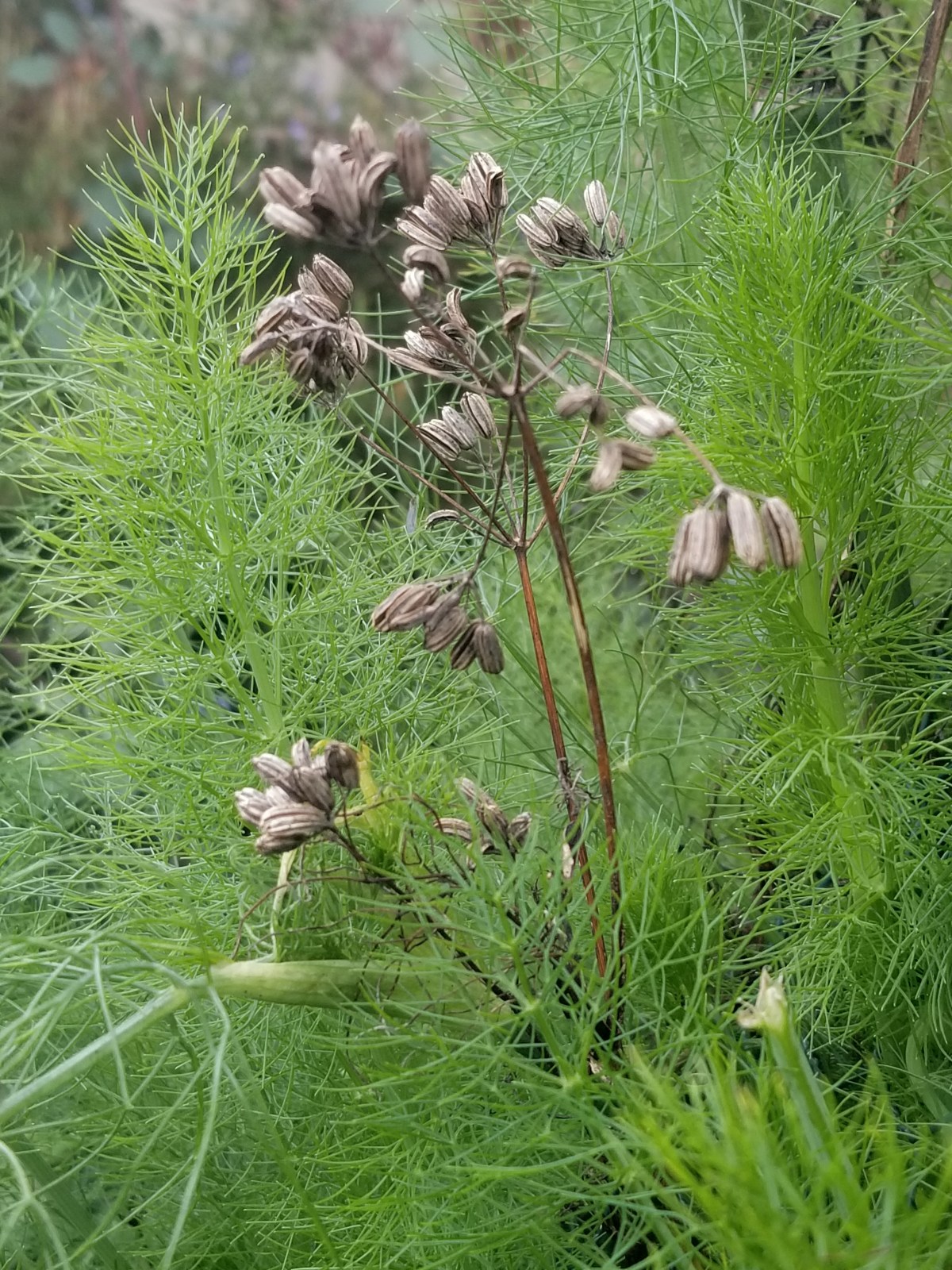
The fennel seeds surround the stem like the petals of a flower. You can hold a stem for them to peck the seeds, and it’s a great way to encourage them to sit on your lap or even to do simple tricks. You can also just toss the stems down and let them get at the seeds themselves.

My fennel patch is a few years old and continuously produces lovely, tasty fennel fronds. They are good in salads and as a garnish on main dishes. Fennel seeds are good for a variety of food, and fresh from the garden they have the most flavor. They are so easy to care for that I don’t even think about them when I do my gardening. They are well worth keeping a spot for because of the variety of food they produce, in bulbs, fronds and seeds. All are delicious for people and chickens. My girls will beg for them.

Fennel contains vitamin C, which is absolutely necessary for laying and egg quality. Chickens can synthesize their own vitamin C, unlike humans, but dietary vitamin C may improve their growth and eggshells. It will also improve their mood, in my experience. It is fun and delicious to eat.

Caught in the act!

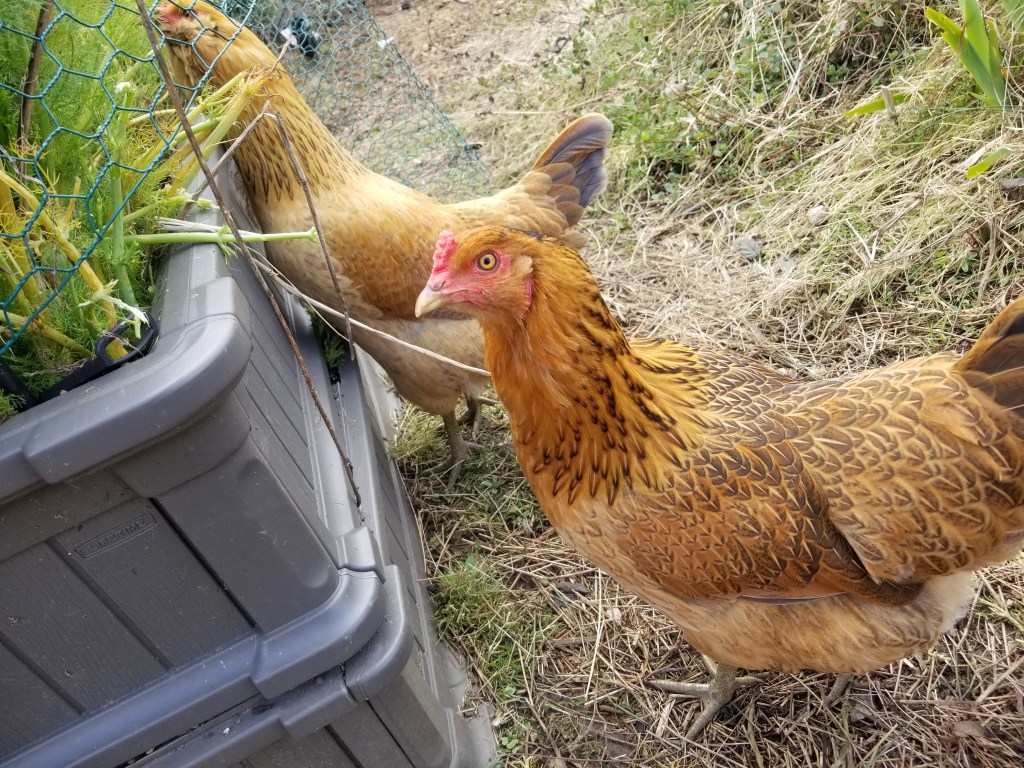
So, as you plan for your spring garden, make sure you leave a little corner or a planter somewhere for a bit of fennel. Be prepared to guard it with some chicken wire, though, because once your girls realize how yummy it is, they will be reluctant to wait for you to offer it to them.

The Mean Hen

What do you do about a mean hen? Do you tolerate her and let the other girls be bullied, or do you take action?

You will often hear about mean hens and what to do about them. Isolation, rehoming and even culling are recommendations. But, I wouldn’t do any of those things to a pet. There are other options.

I have a mean hen, and her name is Puffin. The day I brought her home from the post office, she pecked me. She was two days old and I was taking her out of the shipping crate and she pecked me. I was smitten. Puffin got her name because of her puffy cheeks and her eye markings. At first she looked more like an owl to me, but then she became a puffin. She was easily identifiable from the other chipmunk chicks because her face was twice as wide, which made it easy to attach to her. She pecked me several times as a tiny chick, and it was just her thing. I laughed every time.

See those puffy cheeks! So cute!

I had ten chicks because that’s how they were shipped from the hatchery, but I couldn’t keep them all in my small yard. I knew that I would have to rehome some of them. From the start I didn’t want to get attached to all the chicks to the same degree, because I would have to say goodbye to some and I am terrible at that. I seriously considered giving away Puffin, because I knew she would likely become a mean hen and peck the rest of the girls, if she didn’t turn out to be a cockerel. On the other hand, could I give someone a chick that I thought would be a bully to their flock? What would they do about her? Also, I think Puffin is my prettiest hen, even though nobody agrees with me and everyone has their favorite. That, and how much I love when she pecks me or tells me what’s what were reasons I decided she will be mine forever.

She did grow up to be a bully. She’s not the only poulet that I’ve seen pull out other poulet’s feathers, but she was the queen of plucking. She would grab a beakful of neck feathers and hold on. The feathers came out when the owner pulled away. When she did this I would scold her, and give her a timeout in a travel crate. Twice, she had to spend a night alone in the old coop.

I’m pretty sure that Puffin is my smartest hen, as well as my feistiest (and prettiest). And sometimes when there is a dispute the fault is mine. My chickens are great communicators, but I can be pretty slow at understanding. The first peck was obvious. “Put me down, you strange monster!” Other pecks were for the same reason, when she was a chick. We are not strangers now, and I can pet her and pick her up and she doesn’t peck me. But when she was tiny it was her way of communicating with me that she didn’t like what was happening. I love her for being so outspoken. So, why is my smartest hen picking on other hens, and in particular one hen? It’s because Speck is a jerk. With kids, there are always two involved in any spat. One may seem more culpable because they resort to violence first, but often the other one is the instigator.

Speck is obnoxious. She was the one hen I was sure I would get rid of, and not miss. I should have sent her away (up the block to my neighbor) but at the last minute I decided she was too attached to me. She went from whistling constantly as a chick, really non-stop, irritating whistling, to being the first to jump on my lap or shoulder and beg for attention whenever I went out to be with the girls. She’s also my mother’s favorite as the only one that will also jump on her lap. She stopped the whistling. But she is like a teacher’s pet, always pushing everyone else out of the way, stealing food and running away with it. She has no respect for the pecking order. In other words, she lacks social skills.

So, I had a long couple of talks with Puff-Puff. I explained to her that I believe her and that I totally agree. Speck is unbearable. But, Puffin won’t grab onto neck feathers any more. It’s not acceptable, and will result in a timeout and missing snacks. It took a few explanations and reminders when it seemed like she was ready to go on the attack, but praising her for a simple peck in Speck’s direction, and picking her up and giving her timeouts when she instead tried to grab feathers, was only half the solution. The other half was to make sure that Speck was not given any special treatment for her attention-seeking behavior. I gently push her away when she tries to get most of a treat, before the other hens. She is not one of my smartest hens and her training is ongoing.

Puffin is feisty. She pecks me now to tell me something is wrong, like the water dish needs washing or that it’s past snack time and there have been not enough snacks. They have always been gentle pecks, and I still adore them. I make sure that she knows that I love her. I also love Speck, but she is still annoying sometimes. It just took me looking at her the way another chicken would to understand the dynamic. What I find the most interesting is that these personalities were set in stone before I got these tiny chicks out of the shipping crate. But, luckily, their behaviors are not set forever. They just need the love and understanding given to a child and gently nudging in the right direction to be happy flockmates.

Starting Out

Where do you start to become a pet chicken keeper? It is mostly in the planning and partly in the preparation, and there are many options.

Once you have decided to become a chicken keeper, you have a lot of choices to make. It will take a certain amount of research before you can get started, if you want to be successful. The decisions range from housing, feeding, choosing breed, caretaking and purchasing. Pets are expensive and with chickens the main expense is not going to be the cost of the birds, or vet bills, but in caring for them and raising happy girls.

First, decide how many chickens you want. It might seem like a good idea to start small, but chickens need their flock. Some lone birds are kept as pets, but this is only feasible if you are wanting a chicken as a house pet. They need near constant companionship. A flock of three birds will have a different dynamic than a flock of six, and raising them is two different experiences. Chickens have likes and dislikes for each other. A larger flock allows more birds to make at least one friend. In a flock of three, one is the odd one out.

There are even options for the age of the chickens that you get. You can avoid the expense and labor of raising your own birds by buying pullets (a few weeks old) or by rescuing factory hens. But, these are not raised to be pets and won’t be as attached to you as the chick you raise by hand. Be sure to only buy sexed female chicks or pullets. It might seem like it would be fun and educational to buy an incubator and eggs, but gender is not guaranteed. Most suburban areas have a law against owning a rooster, and even if you are in the country a rooster may not have a personality suited to being a pet. For many of us, killing an animal that was intended to be a pet, just because it is the wrong gender, would be heart-wrenching. You might be able to give away or sell any cockerels you hatch, if you are okay with knowing that they will most likely be someone’s dinner. I recommend watching a video on YouTube if you want to share the incubation and hatching process with your kids.

Based on the number of chickens you will get, you will want to select a coop. If you are handy, you may be able to build a coop and run for your girls. This is the best option, but coops need to be draft free, and still have ventilation so the birds have clean air to breathe. You may want to buy a set of plans the first time you construct a coop. Always build a bigger coop than you think you will need. If you are buying a coop, buy one that says it can house more chickens than you will ever have. These specifications range from tiny bantams to normal hens, and rarely are large enough.

You don’t need to have a coop set up before you buy chicks, but you do need to have a brooder. Your local feedstore could set you up with a metal tub or cardboard box and a heat lamp and bulb, but I do not recommend this option. Heat lamps are dangerous for chicks and homeowners, as they cause fires and heat unevenly. Instead, get a dog playpen made from fabric and a brooder heater. These pens are octogonal and flexible and chicks won’t be crushed to death in the corners like can happen in a box. They can go under the heater to sleep, and come out to play and never be too hot or too cold. I know that some people will use a light bulb or a reptile rock, and that they have high death rates for their chicks. Please don’t be tempted. Your chicks will live in their brooder for weeks, and grow exponentially from the tiny one or two day olds that you bring home, so I recommend to have two sizes for the brooder and switch when they outgrow the first one. When you can take them outside will depend on the weather and protections you have for them.

Chick feeders and waterers are cheap, but you could use anything almost as a feeder. Waterers have to be drown proof for the very small chicks. If you are getting unvaccinated chicks, I recommend medicated chick crumbles. For vaccinated chicks, get unmedicated chick crumbles. This is all the food you will need for the first two weeks, unless you have a sick chick. I recommend fine pine shavings for the bedding. Don’t use newspaper because chicks can slip, fall, and become crippled.

Your next decision is one of the biggest: what breed(s) to buy. Most feed stores carry a selection of layers, dual purpose, and meat birds. They have been bred to fulfill their purpose with maximum efficiency, not for being pets. Layers only have a usefulness of a couple years to egg farmers, so they are prone to tumors and generally shorter lifespans. Meat birds only have to live a few weeks so they are not bred for a long lifespan, either. Your best bet at a feed store then is to look for breeds which don’t lay as many eggs or as large as the factory layers, such as the colored egg-layers. However, your options aren’t that limited. Heritage breeds and other designer breeds can be purchased from specialty sites and hatcheries. Do some research to see which are the friendliest, longest lived, prettiest, and healthiest that are available in your area.

Another reason that I don’t recommend just impulse buying chicks from the feed store is that the chicks have been exposed to whatever chicken farmers might track into the store. There are a number of chicken diseases best avoided. These chicks have already been stressed out from shipping and then displaying and then you have to take them home and put them someplace new. If you get your chicks from a hatchery, either by picking them up or having them directly mailed to your post office, you can avoid some of these steps and you get to bond with your chicks sooner.

All of these decisions may seem overwhelming, but take them one at a time and they are simple. Enjoy researching about chicken breeds so that you can get pets you are really looking forward to raising. Keep in mind that these are members of the family. When raised as pets with love and care, your girls will show you their individuality and win your heart.

Toy of the Month – Pomegranates!

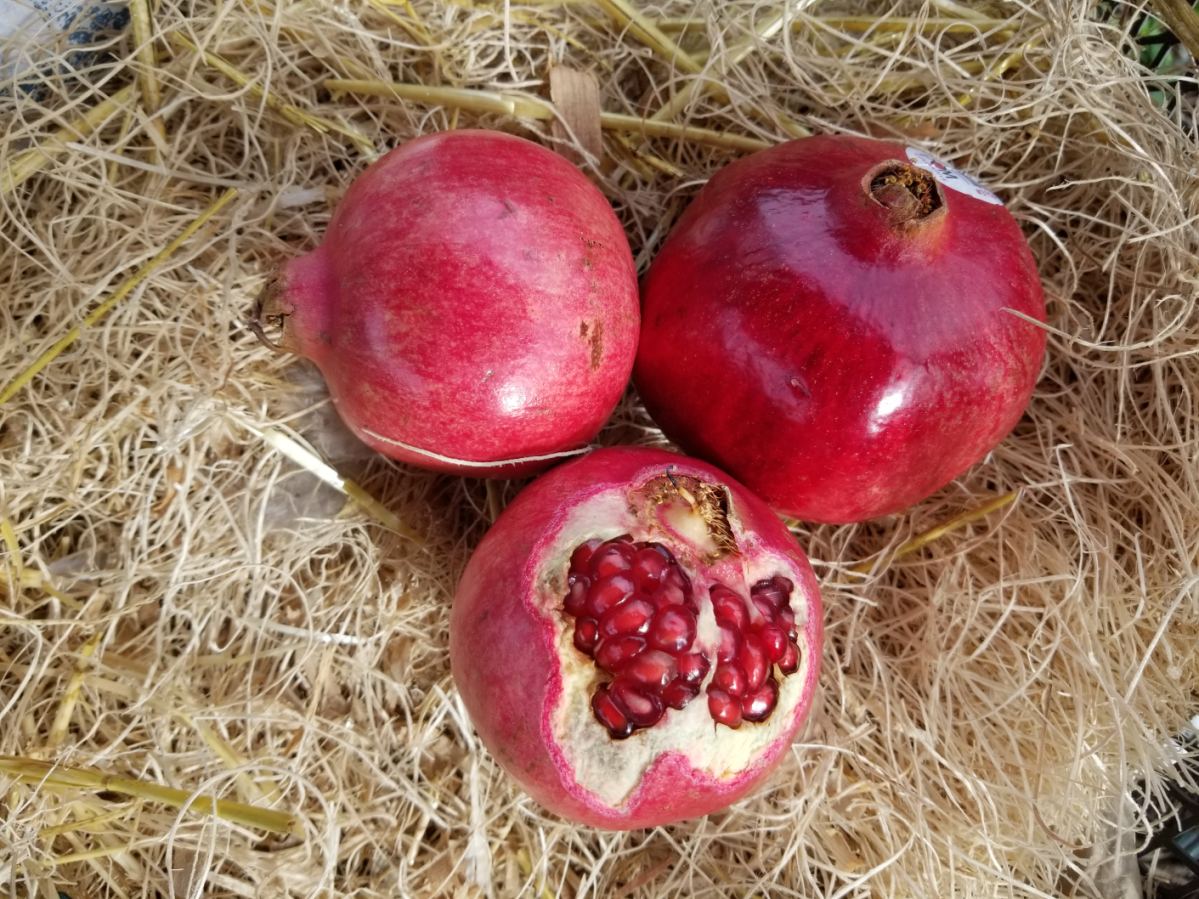
Pet chickens must have their toys, and this month is the time to introduce them to one of the best. It’s pomegranate season and you can usually find them at a reasonable price. It’s very interactive, delicious for you and them, and very healthy. Play with your girls as you unwrap the anils for them. This activity will help develop or strengthen your relationship with your pets.

Pet chickens must have their toys, and this month is the time to introduce them to one of the best. It’s pomegranate season and you can usually find them at a reasonable price if you know where to shop. A grocery outlet store has them at 4 for $5 US. Winco usually also has great prices on them in November. Choose fruit with a thick rosy rind. The thinner the rind, the older the fruit, and for chickens underripened fruit is better than overrippened because they don’t miss the higher sugar content.

These are the first fruit I shared with my fall chicks. They were about five or six weeks old when they got their first anils. Chickens do not share the same tastes in food, like humans, and some will take to new foods faster than others. They will develop a taste for fruit at their own pace, and by watching the other chicks. Peeling this fruit by hand is time-consuming, with chicks or hens waiting eagerly for you to unlock the treats. It’s all quality time, helping to develop your relationship with your girls, so you can get a lot of enjoyment from a single fruit, or even part of one.

I like to go outside with a whole pomegranate, pretending to ignore my hens, and sit in a chair to just show it off for awhile, and then peel it slowly. They follow and get excited in anticipation, and explain to me how much they want some. They will stand on my feet and jump onto the arms of the chair and my lap, and I will hand feed them the seeds or hold out small portions for them to peck out the seeds. It is very hard for me to get any of it into my mouth before they swarm me, because they love it so much. It’s good to take a small towel because fruit juice will probably fly in all the fun.

You can also just cut the fruit into portions and let the hens work the anils out by themselves. They will also eat some of the white membranes inside the rind, but not the rind. This gives them a toy and a treat, but doesn’t have all the benefits of playing with your pets.

You can google all the health benefits from eating pomegranates, including antioxidants and digestive health. And, they are chick sized fruit with seeds which makes them a perfect toy and snack in one.

Fizzy Loses Her Feathers

Have you ever opened the coop one morning and there were feathers everywhere? The feathers are all sizes from tiny to tail feathers and they are scattered over the bedding. It looks like an animal got in there and mauled one of the hens, pretty scary. But when all the hens are accounted for and nobody has an injury, you know that molting season has started.

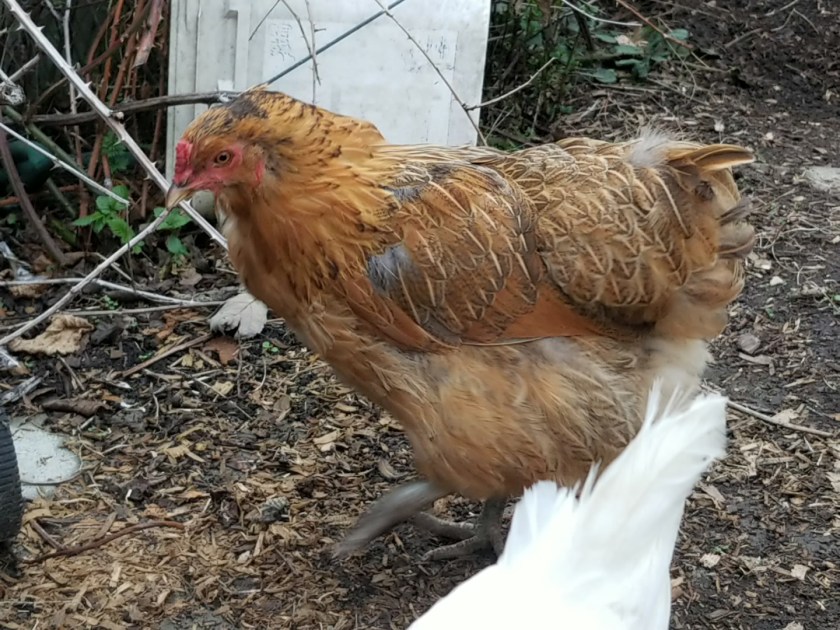
Fluffy puffs of gray and white downy parts of contour feathers are showing. No tail!

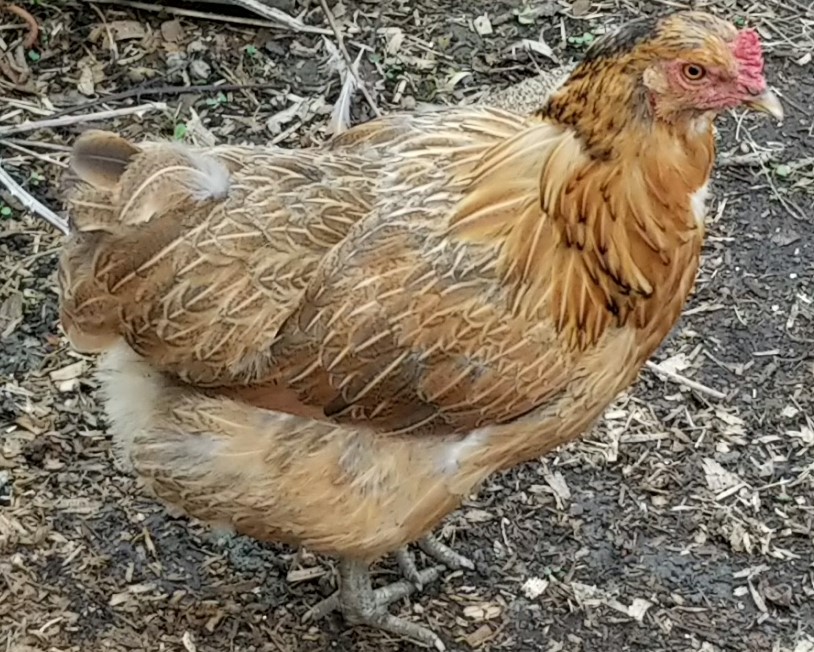
The hens don’t all molt at the same time or the same rate, even though they have the same hatch day and all my girls are Easter Eggers. Right now, only Fizzy looks like she is going through a hard molt, losing patches of feathers on her neck, her body and wings, and all her tail feathers. She shakes her head and the feathers fly out.

I worry about her because the girls are only a year old and this is the first time this has happened, and I don’t want her to get picked on. She is my gentlest of hens. So, I’ve been keeping an eye out, checking on her often and making sure she gets her share of the food. So far, I haven’t seen anyone bother her that she couldn’t shoo away.

Here in the Pacific Northwest, it has been raining and storming and much darker outside than it was just two weeks ago. Hens need a certain amount of light per day in order to lay an egg, so production is slowed and may stop soon. I’ve noticed that some of the folks nearby that sell eggs have their “Sorry no eggs” signs up already. It will probably be months before Fizz lays again. I have no conflicting feelings about this, because I want Fizzy to have a long happy life and she needs a break.

I’ve been giving all the girls extra protein treats, dried mealworms and scrambled eggs as a supplement to help grow back healthy feathers. I still have layer feed in the feeders because I got three eggs today. The extra calcium in layer feed is essential for the layers. Once all my girls stop laying for the season I will switch them to raiser feed and stop giving them egg shells so they will get the right nutrition for Winter, while cutting back on the treats.

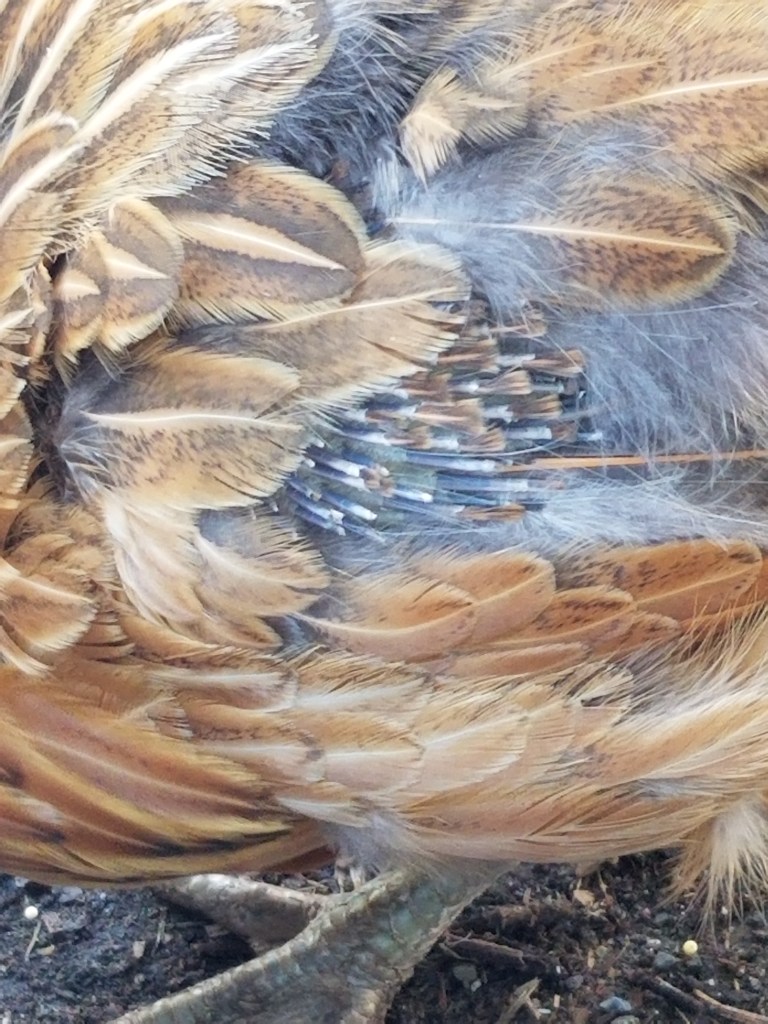
Closeup view of feathers growing back. No touching!

Fizzy’s feathers are already coming back, and she seems happy, but she doesn’t want to be touched. I think that the new feathers are probably sensitive, so I just talk to her and feed her and make sure she is warm and dry. She’s actually pretty cute, to me, with the spots of gray that remind me of when she was tiny. She’s adorable without her tailfeathers, like a fluffy stuffed toy that I can’t pick up.